

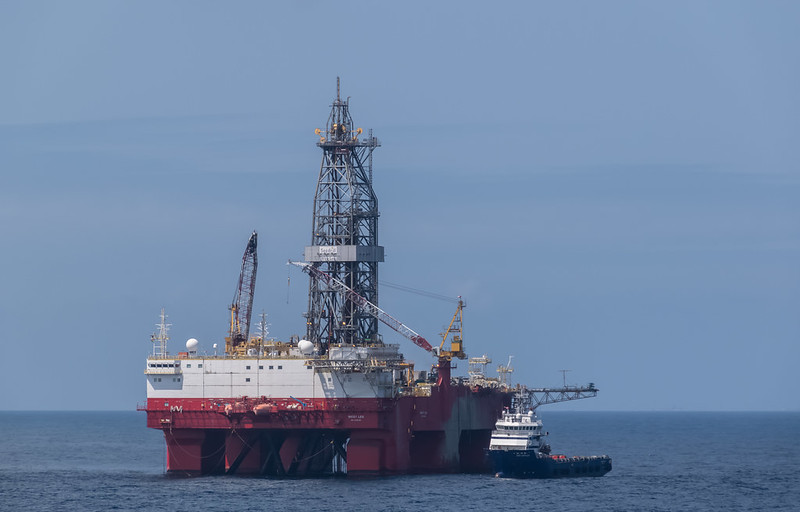
Ghana’s oil production is facing significant challenges, reflecting the global shift from fossil fuels to green energy. According to the Chamber of Bulk Oil Distributors (CBOD) report for 2023 has blamed the sluggish recovery of Ghana’s oil sector to a combination of factors, including the international pivot to renewable energy investments, the relatively small sizes of Ghana’s oil blocks, and the substandard quality of exploration data available in the country. These factors have collectively undermined investor confidence, slowing the exploration and development of oil resources and exacerbating the sector’s recovery challenges.
The report said that after reaching a peak production level of 71.4 million barrels in 2019, Ghana’s upstream crude oil production has been on a downward trajectory. Production figures declined to 66.9 million barrels in 2020, 55 million barrels in 2021, 51.8 million barrels in 2022, and a further drop to 48.2 million barrels in 2023. This consistent decline, marking the fourth consecutive year of reduced output since the start of commercial oil production in 2010, highlights the urgent need for transformative strategies in the oil and gas sector.
Ghana’s Energy Transition the Solution?
Recognizing the pressing need to diversify and future-proof its energy sector, Ghana has embarked on a bold energy transition journey. At the core of these efforts are significant initiatives in the downstream sector, including the establishment of the Petroleum Hub Development Corporation and the commencement of the National Energy Transition Policy.
In its drive to transform Ghana into Africa’s leading petroleum hub, the government passed the Petroleum Hub Development Corporation Act (Act 1053), which aims to promote and develop a world-class petroleum and petrochemicals hub. This ambitious project spans 20,000 acres along the coastline of the Jomoro District in the Western Region. The hub is structured into three development phases, each with specific projects to enhance Ghana’s position as a regional energy powerhouse.
Simultaneously, the National Energy Transition Committee was tasked with developing a comprehensive energy transition policy. This policy seeks to evaluate the existing energy sector, establish national objectives and targets for the transition, and prescribe policies and measures for achieving these targets. Furthermore, it assesses the benefits, risks, and costs associated with the global energy transition, ensuring Ghana remains competitive while addressing environmental concerns.
Read also:Fuel Pricing In Ghana And Deregulation Impact
The National Energy Transition Framework
In November 2022, Ghana unveiled its National Energy Transition Framework (NETF), a detailed roadmap guiding the country’s energy evolution through 2070. This framework is pivotal to decarbonizing Ghana’s energy sector while safeguarding economic growth and ensuring energy security. Among the framework’s critical goals is achieving universal access to electricity by 2024. To meet this objective and future energy demands, Ghana plans to increase its installed capacity to 83 GW, with 21 GW derived from renewable energy sources.
This diversified energy mix is expected to ensure cost-efficient electricity generation, with production costs projected to fall below 4.5 cents per kWh. Moreover, the framework targets the mitigation of 200 million metric tons of CO2-equivalent greenhouse gas emissions, significantly reducing energy-related air pollution and its associated health risks. The framework is estimated to avoid 200MtCO2-eq emission (Energy Transition emission – 14.5MtCO2-eq), achieves universal access to electricity – 99.8% by 2030; access to and commercialization of the green trade market (21GW of installed capacity); among other goals.
The socio-economic benefits of the energy transition are profound. The introduction of advanced technologies like Carbon Capture Utilization and Storage (CCUS), nuclear power, hydrogen energy, and electric vehicle (EV) infrastructure is projected to generate over 1.4 million new job opportunities. Additionally, the adoption of clean cooking fuels and technologies is expected to save an estimated 30 million productive hours annually for women and children, who traditionally gather firewood for household use.
Read also:Commercial Fuel Distributor in Ghana
Leveraging Ghana’s Natural Resources for a Sustainable Future
In addition to diversifying its energy mix, Ghana plans to capitalize on its rich deposits of critical minerals, such as lithium and graphite. These resources are essential for the global transition to cleaner energy technologies, including battery production and electric vehicles. By investing in value addition and local processing, Ghana aims to position itself as a key player in the global clean energy supply chain. This strategy could transform the country into a hub for EV manufacturing and battery technology development, boosting its industrial base and creating additional economic opportunities.
Read also: Insight into Fuel Distribution in Ghana
Renewable Energy and the Road Ahead
Ghana’s commitment to renewable energy is evident in its plans to expand solar, wind, and other green energy solutions. By 2070, renewable energy sources are expected to form a significant portion of the country’s energy landscape, reducing dependency on fossil fuels and enhancing energy security. This transition aligns with global efforts to combat climate change and positions Ghana as a leader in sustainable energy development within the West African region.
Despite the challenges posed by declining oil production and the global shift away from fossil fuels, Ghana’s proactive measures, as outlined in the National Energy Transition Framework, demonstrate a forward-looking approach to energy management. These initiatives aim to balance economic growth with environmental sustainability, ensuring that the energy sector continues to contribute meaningfully to national development while adapting to the realities of a decarbonized world.
Finally, the moral of this post is that the world is continuously changing. Nothing last forever, if you dont adapt you will be left behind. The decline in Ghana’s oil production serves as a wake-up call for both the government, stakeholders and the private sector to rethink strategies in the face of a rapidly evolving global energy landscape towards green energy and net zero. The implementation of the National Energy Transition Framework not only promises to stabilize and diversify the energy sector but also offers a blueprint for a sustainable and prosperous energy future and emerge as a leader in Africa’s sustainable energy revolution.
If you are looking for fuel supply in Ghana, Get intouch with us. Goodpappa Energy focuses on bulk fuel supply in Ghana- nationwide to corporate base customers. Talk soon.